If you have ever looked at a Downtown Barrie home and thought, could this work for extended family or extra rental income?, you are asking the right question. The opportunity is real, but the best properties are not always the ones with the most obvious finished basements or extra doors. If you know what to look for before you buy or renovate, you can avoid costly surprises and focus on homes with a clearer legal path. Let’s dive in.
Why Downtown Barrie Deserves a Closer Look
Downtown Barrie sits within the city’s Urban Growth Centre, which Barrie identifies as a focal point for higher-density growth and intensification. The city’s planning framework also supports additional residential units, including second suites and detached ancillary dwelling units, as a form of low-impact intensification that can help expand housing options.
That matters if you are house hunting with flexibility in mind. In practical terms, it means some properties in and around Downtown Barrie may offer real potential for a legal second unit, an in-law suite, or another approved residential setup, as long as the property meets zoning standards and the required approvals.
Know the Terms Before You Shop
One of the biggest mistakes buyers make is using “duplex” as a catch-all phrase. In Barrie, a single detached dwelling with an additional residential unit is not the same thing as a duplex under the zoning by-law.
That distinction matters because the legal route, design requirements, and approval process can be different from what a listing description suggests. Barrie now allows up to four residential units on qualifying residentially zoned properties, subject to zoning standards and approvals, so the better question is not “Is this advertised as a duplex?” but “What does the zoning actually allow here?”
Layout Clues That Signal Potential
A promising property usually shows its potential in the layout first. You are looking for a home that can support a separate living space without forcing a complete structural rethink.
Look for Separate Entrance Options
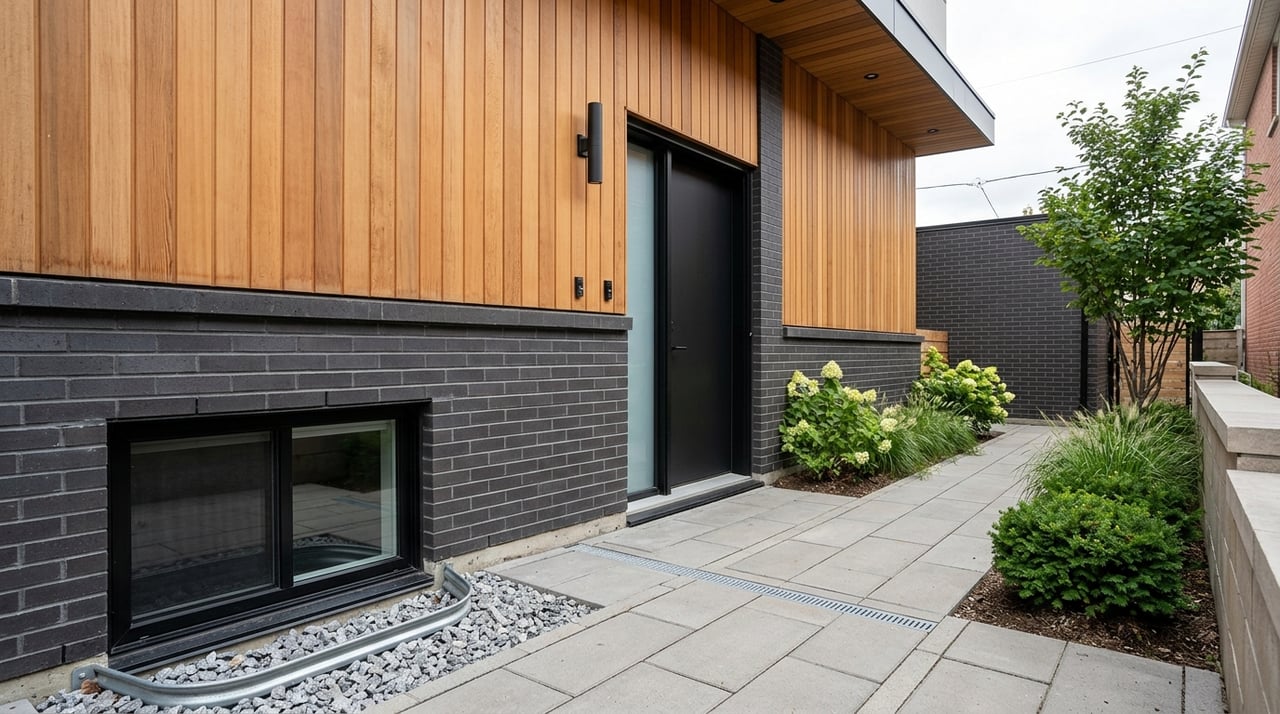
A strong second-suite candidate often has room for an exterior entrance for both units. Barrie’s second-suite checklist specifically asks for exterior entrances, along with below-grade entry details where applicable.
If a basement setup would require a highly complex new entrance or awkward circulation through the main living area, the project may become more expensive and less practical. A cleaner entrance path often means a smoother renovation and permit process.
Check Window Size and Natural Light
Basement and lower-level suites need enough window area for light and egress. Small basement windows or heavily below-grade layouts can be a red flag if they limit safe exit options or require major foundation work.
When you tour a home, pay attention to how much of the lower level is above grade. More natural light and larger windows can make a big difference in both livability and renovation feasibility.
Notice Plumbing Placement
Kitchen and bathroom plumbing are key pieces of the puzzle. If the lower level already has a bathroom or sits near existing plumbing stacks, that can make a future conversion more straightforward.
It does not mean the suite is automatically legal. It does mean the home may offer a more efficient starting point than a property where all new plumbing routes would need to be carved out from scratch.
Measure the Space Realistically
A lower level may look large enough at first glance, but usable suite potential depends on more than square footage. Barrie’s checklist points buyers and owners toward important details like ceiling heights, laundry layout, fire separations, and alarm locations.
That is why an open basement is not always a better candidate than a well-planned one. The strongest properties tend to have enough space to fit the required functions without creating an awkward or cramped layout.
Detached Suite Potential Comes With Different Rules
Some buyers are not just thinking about a basement suite. They are also wondering whether a rear-yard structure could work as a detached additional unit.
In Barrie, that idea can be viable on the right property, but the lot has to cooperate. A detached suite or coach-house candidate usually needs rear-yard space, street frontage on the principal lot, a clear path from the street or parking area, and enough setback room to fit the structure legally.
Barrie’s rules also state that accessory-building units are not allowed in a front yard and cannot have a basement. So if you are looking at a compact downtown lot with limited backyard depth, detached-suite potential may be much more limited than it appears online.
Parking Can Make or Break the Plan
Parking is one of the most overlooked parts of suite potential in Downtown Barrie. Buyers often focus on interior layout first, but the city also requires one parking space per dwelling unit in the residential zones it lists for additional residential units, and the city’s checklist asks for parking-space dimensions and driveway access details.
Tandem parking is permitted, which can help on tighter urban lots. Even so, not every driveway or lot configuration will work once you account for legal dimensions and access.
Downtown conditions add another layer. Barrie notes that there are more than 2,000 public parking spaces downtown, but on-street parking is limited to 2 hours and is not permitted from 3 a.m. to 6 a.m. during the winter restriction period. In older central neighbourhoods, parking and traffic concerns can become more noticeable because these areas were not designed around today’s vehicle patterns.
Start With Zoning, Not Listing Remarks
If you are serious about buying for in-law suite or multi-unit potential, zoning should be one of your first checks. Barrie advises owners to confirm the property’s zone through the city’s mapping tools and to verify property lines and setbacks with a survey.
The city also notes that parcel data on the portal is only a general guide. An Ontario Land Surveyor survey is required to confirm setbacks, coverage, and parking dimensions, which makes it a critical step before you rely on a lot’s apparent size or shape.
Watch for Heritage and Historic Review
Downtown Barrie buyers should be especially careful around older homes and historic areas. Barrie’s Official Plan says development on protected heritage lands or in historic neighbourhoods may require a heritage impact assessment, a historic character impact evaluation, tree preservation planning, or demolition-control review.
The Dunlop Historic Streetscape Corridor has added heritage-focused review expectations. That does not mean a project cannot move forward, but it does mean the path may be more detailed than it would be on a similar property outside a historic context.
Understand the Permit Path Early
Another common misconception is that permits only matter if you are doing major construction. Barrie says a building permit is required for a change of use even when no construction is proposed, and change-of-use projects are regulated by the Ontario Building Code.
The city also notes that an applicable-law checklist is part of the permit process. On the plus side, site plan approval is not required for residential development under 10 dwelling units, which may simplify certain smaller-scale residential projects.
If you are buying an older home with an existing lower-level unit, do not assume it is already compliant. Barrie requires all second suites and detached accessory dwelling units to be registered, and the city states that existing detached accessory dwelling units created without a permit must meet current zoning and Ontario Building Code standards.
For older second suites that existed before July 14, 1994, Barrie says owners should go to Service Barrie to begin the registration process. In other words, “already there” and “legally recognized” are not always the same thing.
Safety Upgrades Are Part of Feasibility
A property is only a good candidate if you can realistically bring it into compliance. Fire safety is a major part of that equation.
Barrie says every home needs working smoke alarms on every level. The city also states that carbon monoxide alarms are required in existing homes and in multi-unit residences such as homes with additional residential units, duplexes, and other multi-unit configurations.
For owners or future landlords, Barrie notes that fire separations, exits, doors, and alarm systems depend on occupancy type. That means the true cost of creating a second unit is not just about finishes like flooring and cabinets. It also includes the behind-the-walls work that supports legal and safe occupancy.
Incentives Can Improve the Numbers
If you are evaluating the financial side of a future project, Barrie has some incentives worth knowing about. The city says additional residential unit building permit application fees are reduced by 50% in 2026, with a possible full rebate if occupancy or final interior inspection is achieved within 12 months of permit issuance.
Barrie also says up to two additional residential units per property may be exempt from development charges, while later units are not. Those details will not turn a weak property into a strong one, but they can improve the math on a home that already fits the city’s rules.
What Strong Candidates Usually Have in Common
The best opportunities are usually not the most hyped listings. They are the homes that quietly check the right boxes.
Here is what to look for when you want a cleaner path to a legal in-law suite or additional unit:
- A layout that supports a separate exterior entrance
- Enough window area for light and egress
- Logical space for kitchen and bathroom plumbing
- Room to meet fire separation and alarm requirements
- A lot configuration that can support required parking
- Zoning that supports the intended use
- No obvious heritage, setback, or access issues that could complicate approvals
If a property only works after several major exceptions, it may not be the opportunity it first appears to be. In Downtown Barrie, the strongest deal is often the one that can be adapted with fewer planning hurdles and a more predictable permit path.
Why Local Guidance Matters
This is where local experience can save you time and money. A home can look promising in photos, but suite potential often comes down to details you can only confirm through zoning checks, lot review, renovation planning, and a realistic understanding of the city’s approval process.
At Tait Realty, we help buyers look beyond surface-level features and focus on homes with real upside. If you are exploring Downtown Barrie for an in-law suite, added flexibility, or long-term value, we can help you assess the opportunity with a practical eye. Reach out to Tait Realty to start the conversation.
FAQs
What does in-law suite potential mean in Downtown Barrie?
- It usually means a property may be able to support an additional residential unit, such as a second suite, if it meets Barrie’s zoning standards, permit requirements, parking rules, and safety requirements.
Is a second suite the same as a duplex in Barrie?
- No. Barrie’s zoning by-law says a single detached dwelling with an additional residential unit is not a duplex.
What should you check first for suite potential in Barrie?
- Start with the property’s zoning, then review lot lines, setbacks, parking layout, and whether a survey is needed to confirm compliance.
Do older Downtown Barrie homes face extra review for conversions?
- They can. Properties on protected heritage lands or in historic neighbourhoods may require added review, such as heritage impact or historic character evaluation.
Do you need a permit to create or legalize a second unit in Barrie?
- Yes. Barrie says a building permit is required for a change of use even when no construction is proposed, and second suites and detached accessory dwelling units must be registered.
How important is parking for an in-law suite in Downtown Barrie?
- It is very important. Barrie requires one parking space per dwelling unit in the residential zones it lists for additional residential units, and legal dimensions and access still need to work on the lot.