If you are dreaming about more land, more privacy, and a home base near four-season recreation, Moonstone can feel like the perfect fit. But buying a country home here is not quite the same as buying in a typical town subdivision. The details behind the property, like road access, water, septic, and zoning, can matter just as much as the kitchen, layout, or view. This guide will help you focus on the right due-diligence steps before you make an offer. Let’s dive in.
Why Moonstone buying is different
Moonstone is identified in Oro-Medonte’s Official Plan as a Rural Settlement. That matters because servicing rules in rural areas can vary a lot from one property to the next, especially when a home is outside an established municipal water area.
In practical terms, you cannot assume that a home has the same setup as the one next door. The Township says the majority of Oro-Medonte residents are on private wells, even though it also operates municipal drinking-water systems that serve about 2,500 properties. For you as a buyer, that means the exact lot and its specific services should always be verified.
The Township’s planning framework also says growth in rural settlements is generally limited to infilling or minor extension. If part of your long-term plan is to expand, sever, or add major new features, it is smart to check those possibilities early rather than assume the property will support them.
Check the road before the house
One of the biggest surprises for buyers moving from urban or suburban areas is that not every road works the same way. In the Moonstone area, a property may be on a county road, township road, private road, seasonal road, unassumed road, or unopened road.
That difference affects much more than your commute. It can shape winter access, maintenance costs, driveway approvals, and even whether future changes to the entrance are allowed.
Understand road type and jurisdiction
Simcoe County’s GIS mapping distinguishes different road types, and Oro-Medonte’s Official Plan says County Roads are under County jurisdiction. The same plan also states that direct access to a County Road is not permitted except as authorized by the County.
The Official Plan further says new entrances for individual residential lots created after June 30, 1996 are generally not permitted except within settlement areas and under the County’s access by-law. If you are looking at a property with unusual access conditions, this is a key point to clarify early.
Ask who maintains the road in winter
Private roads need extra attention. Oro-Medonte’s Official Plan says new private roads or extensions to existing private roads are not permitted unless they are part of a condominium plan, and properties without frontage and direct access to a public road maintained year-round are treated as limited-service situations.
The Township also states it is not intended to fund private, unassumed, or partially maintained roads. That means if the home depends on a private lane, you may need to budget for plowing, grading, culvert work, or road-sharing costs.
Look closely at the driveway
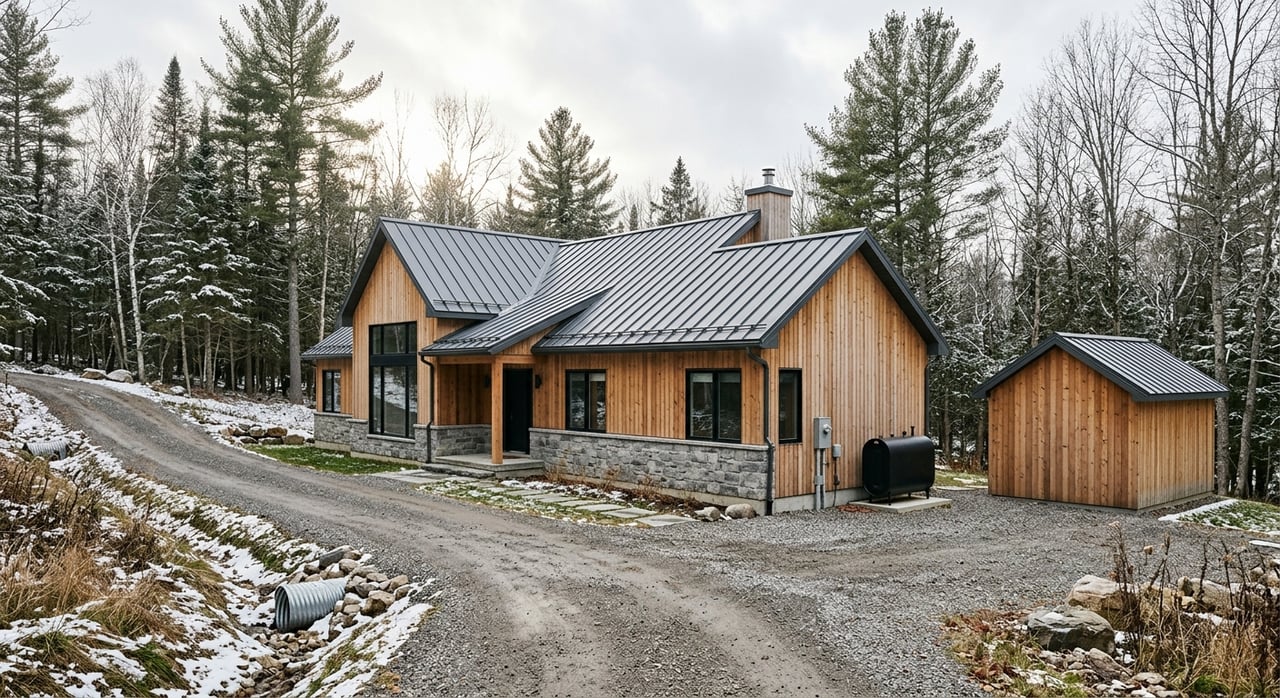
Winter usability is not just about the road itself. Gravel driveways and loose-top access routes may need grading, new aggregate, compaction, dust control, or erosion repairs, according to the Township’s road-maintenance information.
If you are buying in winter, ask how the driveway performs during heavy snow. If you are buying in spring or summer, ask about runoff, washouts, and slippery conditions during thaw periods.
Verify water and septic systems carefully
In a country home purchase, the well and septic system are not side details. They are major property systems that can affect your daily use, future maintenance, and upgrade costs.
Oro-Medonte’s servicing policies say that rural properties outside the established municipal water service area generally rely on site-specific communal or private water supply and sanitary sewage disposal services. Those systems are expected to be technically and environmentally adequate, but you should still verify the facts for the specific property you are buying.
Private well questions to ask
Ontario says the well owner is responsible for the well, and private wells are not routinely monitored the same way municipal systems are. Public Health Ontario says bacterial testing is available free in Ontario for private drinking-water systems and recommends regular testing, especially after spring thaw, heavy rainfall, flooding, or well maintenance.
Ontario also says well owners must maintain wells in a way that helps prevent surface water and other foreign materials from entering the well. For you, that means recent test results and maintenance history matter.
Ask for:
- Recent bacterial test results
- Any water-treatment records
- Well documentation, if available
- Notes on past flooding, runoff, or water-quality concerns
Septic questions to ask
Ontario’s SepticSmart guidance says the Ontario Building Code governs most rural septic systems up to 10,000 litres per day. It also says installations, repairs, upgrades, or replacements must be designed and installed by qualified people and inspected or approved by the local regulatory authority.
Oro-Medonte says keeping the septic system in good condition is the owner’s responsibility. Regular upkeep helps prevent expensive repairs, so a buyer should ask for records instead of relying on verbal assurances.
Ask for:
- Septic permit documents
- System type and installation date
- Last pump-out date
- Service or inspection records
- Notes on any repairs, upgrades, or drainage issues
Review permits and site details
A country property can include more moving parts than a standard subdivision home. The house may be only one piece of the picture, especially if the property has detached garages, sheds, workshops, bunkies, or other structures.
Oro-Medonte’s building and renovating information says permit applications often need a site plan showing the septic system, well, driveway, road, and surface drainage. That is a good clue for buyers too. If those elements need to be documented for permits, they should also be part of your due diligence.
Outbuildings may need permits
The Township says detached accessory buildings such as garages, sheds, or playhouses larger than 10 m² generally require a building permit. It also says a shed may be permit-exempt if it is no more than 15 m², one storey, unattached, used only for storage ancillary to the principal building, and has no plumbing, though zoning setback and location rules still still apply.
If a property includes multiple accessory buildings, ask whether permits were obtained where required. This can be especially important if you plan to finance improvements, renovate later, or sell the home in the future.
Confirm zoning before making plans
It is easy to fall in love with the idea of adding a big shop, enlarging a garage, or creating an accessory apartment. In Moonstone, those plans should be checked against zoning before you count on them.
Oro-Medonte says its zoning by-law controls permitted land uses, building height, setbacks, lot coverage, lot size, parking, accessory buildings, pools, and home occupations. The Township also notes that planning review comes first before most permit submissions.
Do not assume future expansion is allowed
If you want to add onto the home or build a larger accessory structure, the exact zone and any site-specific exceptions should be reviewed on the Township’s zoning maps or interactive zoning viewer. The Official Plan’s direction for rural settlements, where development is generally limited to infilling or minor extension, can affect future plans.
This does not mean your ideas are impossible. It means you should verify what is permitted before the property becomes your project.
Your Moonstone viewing checklist
When you tour a country home in the Moonstone area, keep your questions simple and practical. The goal is to confirm how the property works, not just how it looks.
Use this checklist as a starting point:
- Is the road county, township, private, seasonal, unassumed, or unopened?
- Who handles winter maintenance?
- Does the property have municipal water, a private well, or another water source?
- When was the well last tested?
- What type of septic system is installed?
- When was the septic last pumped or serviced?
- Are there permits for detached garages, sheds, bunkies, or workshops?
- Have there been drainage, culvert, flooding, or spring runoff issues?
- If you want to add on later, what does the zoning allow?
A smart approach to buying in Moonstone
The charm of a country home is easy to see right away. The important part is understanding what sits behind that charm, from road access to servicing to zoning. In the Moonstone area, those details can shape your costs, your comfort, and your future options.
A careful purchase process helps you move forward with more confidence. When you verify the parcel first and the finishes second, you put yourself in a much stronger position to buy the right property for your lifestyle and plans.
If you are considering a country home in Oro-Medonte or anywhere across Simcoe County, working with a local team that understands rural properties can make the process much smoother. Connect with Tait Realty for responsive, high-touch guidance as you navigate your next move.
FAQs
What should you check first when buying a country home in Moonstone?
- Start by confirming the road type, year-round access, water source, septic setup, and zoning, because these can vary significantly from property to property in the Moonstone area.
How common are private wells in Oro-Medonte?
- Oro-Medonte says it operates 12 municipal drinking-water systems serving about 2,500 properties, but also states that the majority of residents are on private wells.
What road issues matter when buying a rural Moonstone property?
- You should confirm whether the property is on a county, township, private, seasonal, unassumed, or unopened road, and ask who is responsible for winter maintenance and any shared road costs.
What water tests should you ask for on a Moonstone country home?
- Ask for recent bacterial test results for any private well, along with any available well records and water-treatment history.
What septic records should you request for a rural Oro-Medonte home?
- Ask for the septic permit, system type, installation date, last pump-out date, and any available service, inspection, repair, or upgrade records.
Do sheds and garages need permits in Oro-Medonte?
- Oro-Medonte says detached accessory buildings such as garages, sheds, or playhouses larger than 10 m² generally need a building permit, though some small sheds may be exempt if they meet specific conditions.
Can you assume you can add a workshop or accessory apartment later?
- No. You should check the exact zoning and any site-specific rules first, because Oro-Medonte’s zoning by-law controls accessory buildings, permitted uses, setbacks, lot coverage, and related development standards.